Tuesday, 9 May 2023

Rare Cannabinoid is Impressing People With Its Weight Loss Potential

TESTSTSARDSAR

Rare Cannabinoid is Impressing People With Its Weight Loss Potential by Patricia Miller

THCV is quickly gaining notoriety for its potential as an appetite suppressant, which could revolutionize how Americans view cannabis. Like most cannabinoids, more research isn’t just needed — it’s required.

However, if early indications are correct, this hemp-derived cannabinoid may be the key to the long-overdue normalization of cannabis in the United States. 

What is THCV?

Delta-9 Tetrahydrocanna-bivarin, or THCV, is a cannabinoid with psychoactive properties that produce energetic effects, including alertness, motivation, focus, and euphoria.

However, unlike THC, THCV is considered non-intoxicating in low doses. THCV is a rare cannabinoid found in both hemp and marijuana but has become more readily accessible since the Farm Bill was enacted in 2018.  

When THCV is used on its own, users may experience a euphoric boost that is not as powerful as a cup of coffee but is much clearer than the typical high associated with THC. While appetite suppression sounds intimidating, user reports paint a much more complex and interesting picture. 

What Are the Potential Benefits of THCV?

THCV’s potential as a “diet supplement” is beginning to gain traction, but like most cannabinoids, reports indicate that it has numerous effects.

Despite being a more energetic cannabinoid, THCV is often credited for its calming benefits, including reducing stress and preventing panic attacks. Researchers believe THCV also has neuroprotectant properties. 

However, THCV’s ability to suppress appetite is the most significant cause for excitement because it has the potential to shift our nation’s perception of cannabis dramatically.

Beyond making significant strides toward federal legalization, THCV can also carve out a path towards normalizing cannabis if it becomes a widely accepted weight loss treatment. 

How Does THCV Impact Appetite?

THCV acts as an antagonist to the CB1 receptors, which has appetite-suppressing effects. Conversely, THC binds to the CB1 receptors triggering numerous responses, including an increase in appetite.

However, our understanding of the endocannabinoid system is still relatively basic. While we can measure cause and effect, we do not fully understand why each cannabinoid affects us the way that it does. 

Users report it reduces food cravings and consumption without inhibiting appetite or upsetting the stomach. These reports are notable because they reflect our current understanding of the endocannabinoid system’s primary responsibility to promote homeostasis and balance within the body.

Instead of forcing you to lose your appetite, it appears as though THCV naturally regulates your appetite to help you consume what your body needs without overdoing it. 

Like other cannabinoids, the effects of THCV vary between individuals and doses. In small doses, it appears to impact everything from appetite suppression to blood sugar levels positively. However, THCV can be psychoactive in high doses and even increase appetite. 

So while the potential of this cannabinoid is something we should be excited about, it is not a one size fits all solution. But, with research ongoing and more people willing to trust hemp, this once rare cannabinoid may be the key to the future of cannabis in America.

This article first appeared in Volume 4 Issue 4 of Cannabis & Tech Today. Read the full issue here.

A link to your site, with your site's name and description as anchor text.


Via https://cannatechtoday.com/rare-cannabinoid-is-impressing-people-with-its-weight-loss-potential/


source https://renzverspaget.weebly.com/blog/rare-cannabinoid-is-impressing-people-with-its-weight-loss-potential

Monday, 8 May 2023

New Research: Cannabis Effective in Managing Myofascial Pelvic Pain

TESTSTSARDSAR

New Research: Cannabis Effective in Managing Myofascial Pelvic Pain by Frank Schuler

Myofascial pelvic pain syndrome is a health condition involving pelvic pain that is often described by sufferers as ‘short, tight, tender pelvic floor muscles that can include palpable nodules or trigger points.’

While it’s unclear how many people around the globe suffer from the condition, it is estimated that 22% to 94% of cases of chronic pelvic pain involve myofascial pain.

Chronic pelvic pain is one of the most common gynecologic conditions around the planet.

Treatments for myofascial pelvic pain vary from patient to patient, with many patients relying on their own regimens for treatment.

Cannabis is a popular medicine for sufferers, and according to a recent study in Canada, there’s good reason to incorporate it into treatment strategies. Below is more information about it via a news release from NORML:

Vancouver, Canada: A significant percentage of women suffering from myofascial pelvic pain (MPP) acknowledge using cannabis and/or cannabis-products as a way to effectively mitigate their symptoms, according to data published in the European Journal of Obstetrics & Gynecology and Reproductive Biology.

Canadian investigators surveyed 135 female patients with MPP, 57 percent of whom acknowledged using cannabis.

Among marijuana consumers, 79 percent said that they used cannabis products to treat their pelvic pain. Nearly eighty percent of those respondents said that they began using cannabis because conventional treatments were ineffective.

Nearly half of consumers said that they used cannabis daily, and more than half did so via inhalation.

“On a scale of zero (totally ineffective) to 10 (totally effective), 69 percent of users rated the effectiveness of cannabis as 7 or higher at relieving pelvic pain,” authors reported. Among non-users, 64 percent said that they “would be willing” to try cannabis as an option to treat pelvic pain.

The survey’s findings are consistent with those of prior studies finding that an increasing percentage of patients with pelvic pain are accessing either cannabis or cannabis products, and that those patients who do so are consuming fewer opioids.

Full text of the study, “Cannabis use preferences in women with myofascial pelvic pain: A cross-sectional study,” appears in the European Journal of Obstetrics & Gynecology and Reproductive Biology. This article first appeared on Internationalcbc.com and is syndicated here with special permission.

A link to your site, with your site's name and description as anchor text.


Via https://cannatechtoday.com/new-research-cannabis-effective-in-managing-myofascial-pelvic-pain/


source https://renzverspaget.weebly.com/blog/new-research-cannabis-effective-in-managing-myofascial-pelvic-pain

Friday, 5 May 2023

High Standards at New Yorks MJ Unpacked

TESTSTSARDSAR

High Standards at New York’s MJ Unpacked by Patricia Miller

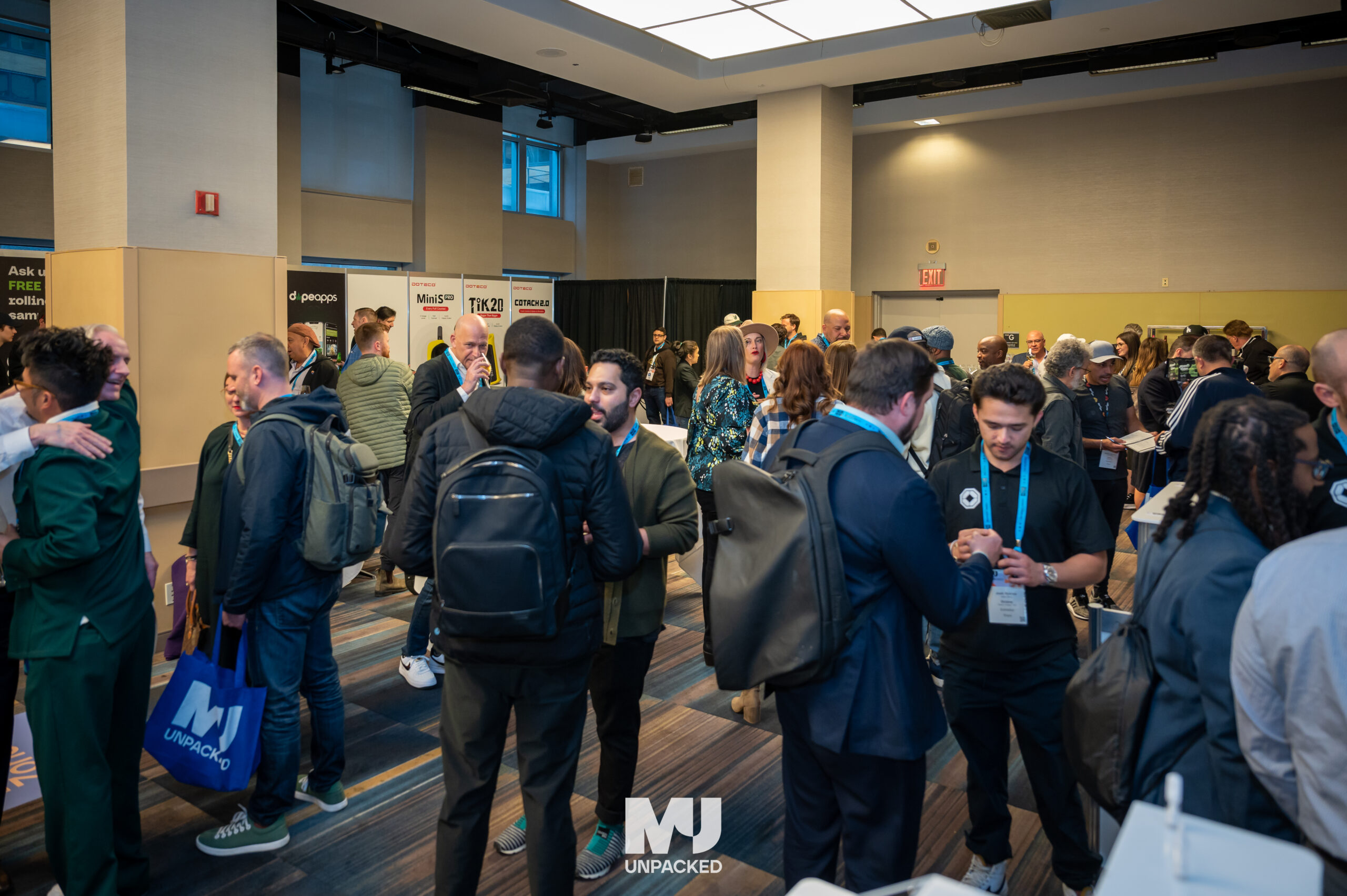
Amid the haste and intensity of New York City, MJ Unpacked delivered a well organized, insightful showcase of brands and thought leaders. Inspiring conversations segued gracefully into networking opportunities.

Exhibitors were thoughtfully arranged, subtly guiding 2,458 attendees from one area of interest to the next. All three days of the vent were consistently busy and every exhibitor seemed eager to chat and share insight into New York’s emerging market.

Location, Location, Location

The New York Hilton Midtown served as an excellent backdrop to MJ Unpacked. Its elegant design seemed to elevate every conversation and for those fortunate enough to stay at the Hilton it offered a seamless transition from business to pleasure.

The on-site amenities at the venue include several bars and restaurants, plus a late night market for easy snacking.

Its central location in midtown Manhattan provided an ideal gateway to some of NYC’s most popular destinations, such as Rockefeller Center, The Museum of Modern Art, St. Patrick’s Cathedral, Times Square, Carnegie Hall, and the list goes on. 

The New York Hilton Midtown is located near many of Manhattan’s most popular destinations.

MJ Unpacked staff (special thanks to Mattio Communications) worked tirelessly to curate high-level discussions around New York’s budding industry.

Staff also made themselves easily accessible to attendees, eagerly directing guests to different areas of the show to make sure nobody missed a session due to a poor sense of direction. 

MJ Unpacked took place April 26-28, 2023 at the New York Hilton Midtown.

After Hours Inspiration

Thursday evening offered a special treat for media attendees. The Media Mixtape Party, produced by The Bluntness, Sensi, Farechild, JVC, and Harbor NYC offered an intimate venue for members of the media and high-level executives to dance and mingle.

Several big names in the industry were in attendance and Farechild co-founder David Tran made the rounds with his usual charm and cordial attitude.

Refillable glass joints from Grav.

The site was consumption friendly and Grav provided handy refillable glass joints to ensure everyone had a way to consume responsibly.

While drinks were overpriced and the tunes were just a touch-too-loud to talk over, the vibe was engaging and business cards and smiles flowed easily.

Courtesy Media Mixtape Party.

It wasn’t quite a rooftop party, but if one knew who to ask, there was a discreet outside area that overlooked the harbor for a romantic and seldom seen view of NYC.    

Closing Day

The final day of MJ Unpacked was as well-attended as the first two. High-level educational sessions continued throughout the day, offering attendees a unique look into New York’s regulatory environment and its hopes for the future.

“Be the Neighbor Everyone Wants” was a particularly interesting session exploring how some brands are approaching social impact and why community connections matter in any marketplace. 

Closing day of MJ Unpacked offered just as much opportunity for networking and education as day one.

Technology demonstrations from new and established brands offered attendees a rare opportunity to interact with software, testing equipment, and more — all under the guidance of the brands themselves.

The expert-led roundtables were well attended and touched on topics relevant to both established entrepreneurs and wide-eyed startups.

Venture Summit activations sparked interest even amid today’s tepid economic climate as East Coast investors sought opportunities to expand their portfolios.

Blunt Brunch, a community for women executives in the cannabis industry, held an on-site activation from 2-3 PM to connect like-minded cannabis colleagues.

The networking activation offered engaging conversations, uplifting insights, and ample opportunity to build relationships with women in the industry.

Blunt Brunch co-founders Parisa Rad and Adelia Carrillo.

Thoughts on New York’s Cannabis Scene

Perhaps the most fascinating aspect of the event for non-NYC residents was the contrast between the industry discussions happening inside the Hilton and the lawless, unregulated cannabis marketplace thriving just outside the doors.

Pedestrians strolling the streets are met with dispensary after dispensary, shockingly few are licensed.

Unregulated products filled the shelves, many with flagrant California stickers adorning the vapes, infused joints, and menagerie of illegally-imported West Coast goods.

When this reporter asked one unlicensed dispensary about the California-state-of-origin stickers, she simply replied “That’s how it is for now, until New York can catch up.”

While unlicensed vendors push untested wares onto an unsuspecting public (largely tourists), the would-be legal operators sit idly by, desperately waiting for licenses to be issued, crops to be cultivated, and regulators to catch up to demand.  

If you’re seeking a well-organized East Coast cannabis investment event set in the heart of midtown Manhattan, MJ Unpacked should be on your list. Attendance is exclusive to cannabis executives and accredited investors, so anyone you meet could be a potential business partner, investor, or vendor.

The next MJ Unpacked event takes place Oct. 10-12 in Detroit, Michigan.

A link to your site, with your site's name and description as anchor text.


Via https://cannatechtoday.com/high-standards-at-new-yorks-mj-unpacked/


source https://renzverspaget.weebly.com/blog/high-standards-at-new-yorks-mj-unpacked

Thursday, 4 May 2023

Patients Will be the Biggest Winners of European Legalization

TESTSTSARDSAR

Patients Will be the Biggest Winners of European Legalization by Alex Rogers

Adult-use cannabis legalization has garnered significant attention to start this decade in Europe, and rightfully so. The effort to legalize cannabis for adult use is not new on the continent. However, the momentum for legalization in Europe is greater now than ever before.

In Malta, adult-use legalization is already a reality. This month, regulators will begin accepting applications for non-profit cannabis clubs to supply consumers. Adult households in Malta also have the freedom to cultivate up to four plants thanks to a limited legalization measure that passed in late 2021.

As adult-use legalization grows, it is as important as ever to be mindful of suffering patients throughout Europe and to ensure their needs aren’t lost in the hype.

Every cannabis advocate across the European continent needs to push for safe access and sensible medical cannabis policies to ensure no suffering patients are left on the outside looking in.

Fortunately for patients, when adult-use cannabis legalization measures are passed, non-registered patients win.

Safe access to medicine is one reason cannabis legalization measures are sweeping the globe.

Using Malta as an example, every adult who suffers from a condition that can be treated by cannabis can now legally cultivate their own medicine. Once non-profit clubs launch, they will be able to access their medicine that way as well.

The boost in safe access provided by adult-use legalization is not limited to just Malta. In nearly every jurisdiction that permits medical cannabis, certain conditions qualify a patient for a medical cannabis program while other conditions are not on the “approved” list.

When those jurisdictions go completely legal, any patient of legal age can purchase cannabis, regardless of their condition.

How medical cannabis policies and regulations are affected by potential legalization is always a major topic at the International Cannabis Business Conference events in Barcelona and Berlin and that is sure to be the case in 2023.

Both Spain and Germany are home to large medical cannabis communities and both nations are trending toward full legalization.

Spain and Germany are at critical junctures when it comes to cannabis policy. Germany, particularly, appears to be on the cusp of launching the world’s largest adult-use industry sooner rather than later.

The nation’s eventual industry will serve suffering patients in Germany as well as patients from other nations seeking easy access to cannabis treatments. Lawmakers need to be mindful of this and craft policies and regulations accordingly.

What medical cannabis in Europe looks like five to 10 years from now will be much different than how it looks today. As adult-use spreads, medical cannabis reform will spread with it, albeit in an indirect fashion. This growth will ultimately benefit patients, which is always a good thing.

This article first appeared in Volume 4 Issue 4 of Cannabis & Tech Today. Read the full issue here.

A link to your site, with your site's name and description as anchor text.


Via https://cannatechtoday.com/patients-will-be-the-biggest-winners-of-european-legalization/


source https://renzverspaget.weebly.com/blog/patients-will-be-the-biggest-winners-of-european-legalization

How a Brands Battle for Freedom Inspired a Mission for Change

TESTSTSARDSAR

How a Brand’s Battle for Freedom Inspired a Mission for Change by Rachelle Gordon

Cannabis culture has long been steeped in advocacy. Between fighting for reform, championing environmental causes, and righting the wrongs of the war on drugs, activism is in our roots.

History aside, cannabis consumers are also inherently empathic, demonstrating higher levels of moral decision-making versus non-consumers. Additionally, key demographics like Gen Z and millennials are also far more likely to purchase products that make a difference when given the choice.

For cannabis companies, having a strong social impact strategy ensures they’re doing what’s right while also catering to the sensibilities of consumers. But what exactly does that mean?

Some base their entire brands around social impact, while others support causes near and dear to their hearts in a variety of ways such as donating a percentage of profits to organizations in alignment with their values or encouraging employees to volunteer. There is no one right way to engage — it’s the mission that’s most crucial.

“If we don’t provide a social impact element to this industry, then history will be forgotten,” said Anthony Alegrete, co-founder and COO of 40 Tons, a cannabis brand dedicated to raising awareness and providing opportunities to those impacted by the war on drugs.

Corvain Cooper. Photo credit Emily Eizen.

40 Tons: Fighting for Justice

40 Tons is a quintessential social impact brand, inspired by an authentic passion for change. Anthony started the company along with his wife Loriel Alegrete and longtime friend Corvain Cooper. The three had their lives turned upside down in 2013 when Corvain and Anthony were criminally charged for their alleged roles in a cannabis trafficking operation.

Anthony was given two years in prison. Corvain received a life sentence without the possibility of parole. “It’s like, ‘no, this can’t happen,’” Corvain recalled of the day he was sentenced. “I didn’t have any belief in the justice system.”

Once Anthony was reunited with his family, he refused to stop advocating for his friend. He and Loriel, whose mother had found success with medical marijuana during her fight with cancer, worked with Corvain from the outside to create a legal cannabis brand, inspired by a newspaper headline that read, “Man Sentenced to Life for 40 Tons of Weed.”

The idea was to raise awareness for people like Corvain and help others who had gone through the same struggles.

“We wanted to make sure that we were first and foremost a social impact brand, and whatever we sold was just ancillary to what we represent,” Anthony explained.

“We figured if we can build a community of people around a common cause, that provides tools and resources to help folks, people would want to support that.”

Fortunately, Corvain was granted clemency in January 2021 by outgoing president Donald Trump and released from prison not long after.

Corvain, Loriel, Anthony. Photo credit Emily Eizen.

Now, he works alongside his 40 Tons co-founders as the chief brand officer, sharing his story and bringing attention to the 40,000 people still in prison for non-violent cannabis offenses.

“I want to use my experience as the model,” Corvain said. “We want to help be responsible for saving another life, now that my life has been saved.” 40 Tons sells cannabis flower in dispensaries across California and has done several collaborations with other brands including in emerging markets.

They also offer a variety of apparel and merchandise, all bearing the 40 Tons logo. 

However, the real work comes in the form of initiatives through the 40 Tons Foundation, a 501c3 that provides resources for marginalized communities, advocates for prisoners, and provides resources for incarcerated individuals once they’ve been released to help set them up on a path to success.

40 Tons also hosts career fairs with partner cannabis companies, featuring a range of educational seminars, expungement clinics, assistance with resume building, free headshots and haircuts for job-seekers, and even professional attire for those who need it.

“It’s one thing getting out [of prison] but now what are you going to do after you get out?” Corvain said. “How can we enable you to help your family and get back on your feet?”

Supporting Social Impact Sometimes Means Starting Small

Brands like 40 Tons aren’t just making a difference in the communities they serve — they’re also setting an example in the cannabis industry by bringing visibility to the equity challenges being faced and reminding us there’s still a long way to go with regard to restorative justice.

“If we’re going to have a legal market, make it fair and give people their freedom,” Anthony declared. Corvain agreed, pointing to the fact that criminalization is far from over. “No one really realizes that people are still currently getting locked up for marijuana charges — awareness is number one,” he added.

Anthony, Loriel, Corvain. Photo credit Emily Eizen.

For operators wanting to do the right thing and boost their advocacy efforts, it can be difficult to know where to start. The initial discussions can sometimes feel just as overwhelming, but facing hard truths is the first step toward making real change.

“It’s extremely important that people have that initial conversation. Companies must be willing to talk about what it means to be a social impact brand,” said Loriel, who also acts as the 40 Tons CEO.

She recommends seeking out local organizations on the front lines of causes important to your company’s mission, whether it be social justice, sustainability, or animal rights.

“It’s about finding out who’s doing what and where, and then lending your support, whether that’s with your hands or with your pocketbook,” Loriel suggested.

Once your core cause is defined, it’s crucial to keep the mission at the center of brand communications. Encourage customers to get involved and champion your cause whenever possible. From social media to swag, elevate the company’s beliefs from all sides and hopefully, a ripple effect will soon be seen.

At a time when the cannabis industry is facing great adversity, social impact may feel like a lower priority. But if you ask Anthony and the 40 Tons family, the investment is more than worth it.

“Even though we may make less on the front end, in theory, we should be making more on the back end, because we’re helping society,” he said.

This article first appeared in Volume 4 Issue 4 of Cannabis & Tech Today. Read the full issue here. Header image courtesy of Emily Eizen.

A link to your site, with your site's name and description as anchor text.


Via https://cannatechtoday.com/how-a-brands-battle-for-freedom-inspired-a-mission-for-change/


source https://renzverspaget.weebly.com/blog/how-a-brands-battle-for-freedom-inspired-a-mission-for-change

Wednesday, 3 May 2023

UK Study Fails to Identify Cannabis as a Risk Factor for Psychosis

TESTSTSARDSAR

UK Study Fails to Identify Cannabis as a Risk Factor for Psychosis by Frank Schuler

Cannabis opponents and mainstream media outlets have claimed for many years that cannabis is bad for human brains. As part of their claim, opponents often suggest that cannabis use causes psychosis.

Psychosis is a serious mental health condition that is always worthy of research and thoughtful discussion, which is why public health strategies should be led by science and not the harmful political views of a small group of lawmakers.

Researchers in the United Kingdom recently conducted a study in which they examined what, if any, role cannabis use plays in the development of psychosis. Below is more information about the study’s findings via a news release from NORML:

London, United Kingdom: A history of cannabis use is not associated with an increased risk of developing psychosis, even among those predisposed to the disorder, according to data published in the journal Psychiatry and Clinical Neurosciences.

A team of investigators from Australia, Europe, and the United Kingdom examined the association between cannabis use and incidences of psychotic disorders in clinically at-risk subjects. Researchers assessed subjects at baseline and then followed them for a period of two years.

They reported: “There was no significant association between any measure of cannabis use at baseline and either transition to psychosis, the persistence of symptoms, or functional outcomes.”

The study did not find a connection between cannabis and the development of psychosis.

Authors concluded,  “Our primary hypothesis was that cannabis use in CHR [clinically high risk] subjects would be associated with an increased rate of later transition to psychosis. However, there was no significant association with any measure of cannabis use. … These findings are not consistent with epidemiological data linking cannabis use to an increased risk of developing psychosis.”

Although the use of cannabis and other controlled substances tends to be more common among those with psychotic illnesses, studies indicate that lifetime incidences of acute marijuana-induced psychosis are relatively rare among the general population.

Data published last year in the New Zealand Medical Journal reported that those with a history of cannabis consumption do not typically exhibit more severe symptoms of psychosis than do those with no history of regular use.

Full text of the study, “Influence of cannabis use on incidence of psychosis in people at clinical high risk,” appears in Psychiatry and Clinical Neurosciences.

This article first appeared on Internationalcbc.com and is syndicated here with special permission.

A link to your site, with your site's name and description as anchor text.


Via https://cannatechtoday.com/uk-study-fails-to-identify-cannabis-as-a-risk-factor-for-psychosis/


source https://renzverspaget.weebly.com/blog/uk-study-fails-to-identify-cannabis-as-a-risk-factor-for-psychosis

Tuesday, 2 May 2023

Terpenes Enhance THCs Ability to Interact With Endogenous Receptor

TESTSTSARDSAR

Terpenes Enhance THC’s Ability to Interact With Endogenous Receptor by Frank Schuler

For many years very little was known about cannabis terpenes. Terpenes are the compounds contained in the cannabis plant that gives it its smell. Scientists currently estimate that the cannabis plant contains over 150 different terpenes, with different genetics containing different ratios of terpene levels.

An example of a cannabis terpene is pinene, which is one of the most common terpenes found in cannabis terpene profile testing results. Pinene is known for having a forest-type smell, and can also be found in pine nuts, rosemary, and sage.

Researchers in Israel recently examined cannabis terpenes and how they interact with the endogenous CB1 receptor, and what they found regarding THC’s interaction with the receptor and terpenes could change the way cannabis products and treatments are developed going forward. Below is more information about it via a news release from NORML:

Jerusalem, Israel: Terpenes in the cannabis plant enhance the ability of THC to interact with the endogenous CB1 receptor, potentially heightening its effects, according to preclinical data published in the journal Biochemical Pharmacology.

Israeli scientists evaluated the role of terpenes in CB1 receptor-mediated functions. Researchers also assessed the extent to which terpenes acted as direct CB1 receptor agonists and as modulators of THC agonism.

The molecules that create smells are called terpenes. Each cannabis strain has unique terpenes that alter its smell and taste. Terpenes play a role in how cannabis interacts with the human body.

Researchers reported certain terpenes – including borneol, geraniol, limonene, linalool, ocimene, sabinene, and terpineol – amplified THC activity at the CB1 receptor, even at low quantities.

They reported: “The results demonstrate that all terpenes, when tested individually, activate CB1 receptors, at about 10-50 percent of the activation by THC alone.

The combination of some of these terpenes with THC significantly increases the activity of the CB1 receptor, compared to THC alone. In some cases, several fold.

Importantly, this amplification is evident at terpene to THC ratios similar to those in the cannabis plant, which reflect very low terpene concentrations.”

Authors concluded: “The use of selected terpenes may enable reducing the THC dose in some treatments, and as a result, potentially minimizing the THC-related adverse effects. This would also help in adjusting the treatment to more sensitive populations such as children and elderly. Enrichment with selected terpenes may allow for composition adjustment to personal needs and to changes during chronic use, such as for daytime versus for sleep.”

The findings expand upon those of a 2021 study documenting that certain terpenes activate CB1 and CB2 receptors, and that the combined administration of cannabinoids and terpenes produce additive effects. Authors of that study similarly suggested, “[T]erpenes could be used to enhance the analgesic properties of cannabis/cannabinoid therapy, without worsening the side effects of cannabinoid treatment.”

A study published earlier this year reported that cannabis flowers with elevated levels of the terpenes myrcene and terpinolene are associated with greater perceived symptom relief among patients.

Full text of the study, “Selected cannabis terpenes synergize with THC to produce increased CB1 receptor activation,” appears in Biochemical Pharmacology.

This article first appeared on Internationalcbc.com and is syndicated here with special permission.

A link to your site, with your site's name and description as anchor text.


Via https://cannatechtoday.com/terpenes-enhance-thcs-ability-to-interact-with-endogenous-receptor/


source https://renzverspaget.weebly.com/blog/terpenes-enhance-thcs-ability-to-interact-with-endogenous-receptor

CBDistillery To Launch THCV Study

Moving onto the next “pathfinder mission,” as CBDistillery is calling their intensive research campaign spanning various hemp products an...