Thursday, 26 May 2022

Israel Can Now Ship Medical Cannabis Seeds to the U.S.

TESTSTSARDSAR

Israel Can Now Ship Medical Cannabis Seeds to the U.S. by Patricia Miller

In a historic first, medical cannabis seeds were legally exported this week from Israel to the United States according to Israel’s Agriculture Ministry. Last August Israel’s government reformed cannabis export laws to permit the legal export of medical cannabis seeds, with this week’s shipment to the United States serving as the culmination of many months of effort.

For many decades Israel has served as an international leader when it comes to medical cannabis research. After all, Israel is the home of famed chemist Raphael Mechoulam who is credited with being the first to isolate both CBD and THC back in 1963 and 1964 respectively. From the 1960s until fairly recently, Israel was one of the very few countries that even permitted large-scale cannabis research, let alone embraced it.

Heavily-Researched Cannabis Genetics

It’s not a leap to assume that Israel is sitting on some amazing cannabis genetics given the amount of research its scientists have conducted over so many years. What type of strain(s) were involved in Israel’s first legal cannabis seed exportation is unclear. Who will be on the receiving end of the shipment is also unclear. All that was referenced in the Israeli government’s announcement on that front was, “Upon arrival, the seeds will be examined by commercial hemp growers to verify their suitability for the US market.”

The specific seeds at the heart of this story sent from Israel to the United States originated from the BetterSeeds company. Per the BetterSeeds company’s website, “BetterSeeds makes use of genome editing technology (CRISPR-Cas9) in order to produce new varieties, incorporating game-changing traits which are not today available across all crops due to the limitations of conventional breeding. Genome editing technologies make precise and rapid breeding possible by introducing specific, controlled, and preselected changes in the plant genome.”

BetterSeeds produces more than just cannabis seeds and appears to produce seeds for nearly every type of major crop imaginable. I know that when I read ‘genome editing technologies’ it gave me a bit of heartburn, and I know that I am likely not alone in feeling that way.  However, the seeds that were sent to the United States are proprietary in nature, so we may never know for sure what they are and/or how they may have been altered in some manner.

A Small, Significant Milestone

This first-ever legal shipment of cannabis seeds from Israel out to the international community is worth keeping in context. It is essentially a test run to help ensure that the shipment can be performed and completed in a way that complies with regulations in both Israel and the United States, as well as within evolving international cannabis policy (at least to some degree).

“The shipment is an experimental and initial shipment, after which contacts will be made regarding the continued export. This is a historic step as part of the implementation of Government Resolution No. 4490, which was updated last August to include the export of medical cannabis seeds from Israel, and could lead to the opening of additional international markets for Israeli exports and significantly advance the medical cannabis industry in Israel,” the Ministry stated in its press release.

“The opening of seed exports in the field of cannabis is expected to strengthen Israel’s position as having knowledge and expertise in the field of seeds,” the Ministry also stated in its press release. “In addition, increasing the range of exports and expanding it to cannabis products, will enable the deepening of existing markets and penetration into new markets while riding on the growing wave of demand for cannabis products with medical-health value. Moreover, Israel is among the leading countries in seed research and development in general as well as medical cannabis in particular, and cannabis seed exports are expected to attract interest from various researchers around the world and further strengthen the field of research.”

Obviously, this is not the first time that cannabis seeds have been shipped from one part of the world to another. It’s quite likely, if not guaranteed, that seeds from Israel have specifically made it from Israel to the United States in the past, albeit illegally. Still, this is a big milestone for a country that is sitting on a wealth of knowledge, experience, and other valuable assets, including genetics. Hopefully it leads to a much larger global involvement for Israel within the emerging international cannabis industry.

A link to your site, with your site's name and description as anchor text.


Via https://cannatechtoday.com/israel-can-now-ship-medical-cannabis-seeds-to-the-u-s/


source https://renzverspaget.weebly.com/blog/israel-can-now-ship-medical-cannabis-seeds-to-the-us

Wednesday, 25 May 2022

Its Not Easy Being Green But People Want Eco-Friendly Cannabis

TESTSTSARDSAR

It’s Not Easy Being Green, But People Want Eco-Friendly Cannabis by Andrea Morhardt

A recent nationwide survey conducted by Canivate Growing Systems laid bare the new expectations of cannabis consumers: 64% of consumers are willing to pay more for cannabis that is grown organically with eco-friendly objectives.  

Climate change was once a future concern that many industries were kicking down the road. But now, it’s an immediate crisis. 

As a result, today’s consumer wants to know that the companies they buy from care about the future of the planet. Today’s consumer wants to hear about the commitment, the strategies, and the metrics that will drive change. 

Consumers want companies that are walking the walk to make a difference.

But finding cannabis growers who are truly driven by those eco-friendly objectives — and not simply giving them lip service — is a formidable task.

Sustainable Cannabis Practices Are Still Rare

First, cannabis production overall is not as green and natural as many believe it to be. For example, a recent study set out to answer this question: “Which of the following — a joint, a beer, or a cup of coffee — is more damaging with regard to climate change?”

If the cannabis is grown indoors, the answer is the joint. 

That’s what researchers at Colorado State University concluded when they conducted a study of cannabis greenhouse gas emissions. 

In fact, the study found that indoor cultivation accounts for 1.7% of Colorado’s annual greenhouse gas emissions. Now, 1.7% might not seem significant, but coal mining produces the same percentage of the state’s gas emissions.

Commercial Cannabis Is Often Grown Indoors

Even in climates where outdoor growing is feasible, early policies that originally sought to facilitate regulation and guard against theft made indoor growing the only viable option. 

But even when some of those policies have been lifted, cannabis growers have opted to remain indoors. Of course, cost is a factor, but this is happening for a variety of other reasons, including:

Appearance. Cannabis grown outdoors will not require fossil fuel-burning energy to heat, air condition, or ventilate the plants. However, the flowers and buds on plants grown outdoors tend to have a “rougher” look that is not as aesthetically pleasing to today’s consumer.

Consistency. Because of the unpredictable nature of nature itself, growers typically find it more challenging to produce a consistent product, which is also important to consumers.

Supply. Again, citing the unpredictability of outdoor conditions, growers are reluctant to leave their ability to produce multiple abundant harvests.

Consumers, activist groups, and regulatory voices continue to pressure cannabis cultivators to adjust their practices to become more sustainable and eco-friendly. 

All three groups are sending a very clear message: For the cannabis industry to thrive, sustainable cultivation and manufacturing practices need to be incorporated. Not only because it’s the responsible way to operate, but because a growing number of consumers — and retailers — won’t tolerate anything less.

Understanding Greenwashing

With so many obstacles in the way, companies, whether they are growing the cannabis or ultimately selling the products, have some difficult decisions to make. 

Among those decisions is how can companies satisfy the growing demand for eco-friendly and sustainable cannabis and remain financially viable? 

One unfortunate answer is that some companies are regularly “greenwashing” their brand. 

Think of greenwashing like a hotel labeling itself as “green” just because they provide an option to skip daily linen laundering.

How to Discern Greenwashing From True Sustainability

During the United Nations’ COP26 climate change conference in Glasgow, Scotland, world leaders recently met to address the elevated pace of worldwide rising temperatures and natural disasters. 

Leaders are calling for more alignment between the often-competing interests of financial reporting with environmental, social, and governance (or ESG) reporting:

Among the mandates is a baseline of minimum standards that will enable a more direct line of sight into company practices. 

One of the most significant objectives will be to make greenwashing much harder for companies to perpetuate.

A Company That’s Getting It Right

There are companies out there getting it right. One of them is Kloris.

Kloris is a cannabis retailer with a management team that made a conscious decision as they began their company to do things as sustainably and responsibly as possible. 

Why? “We all have to take responsibility for the state of the planet and this has to be reflected in our actions,” said Pedram Mehrshahi, director at Kloris. 

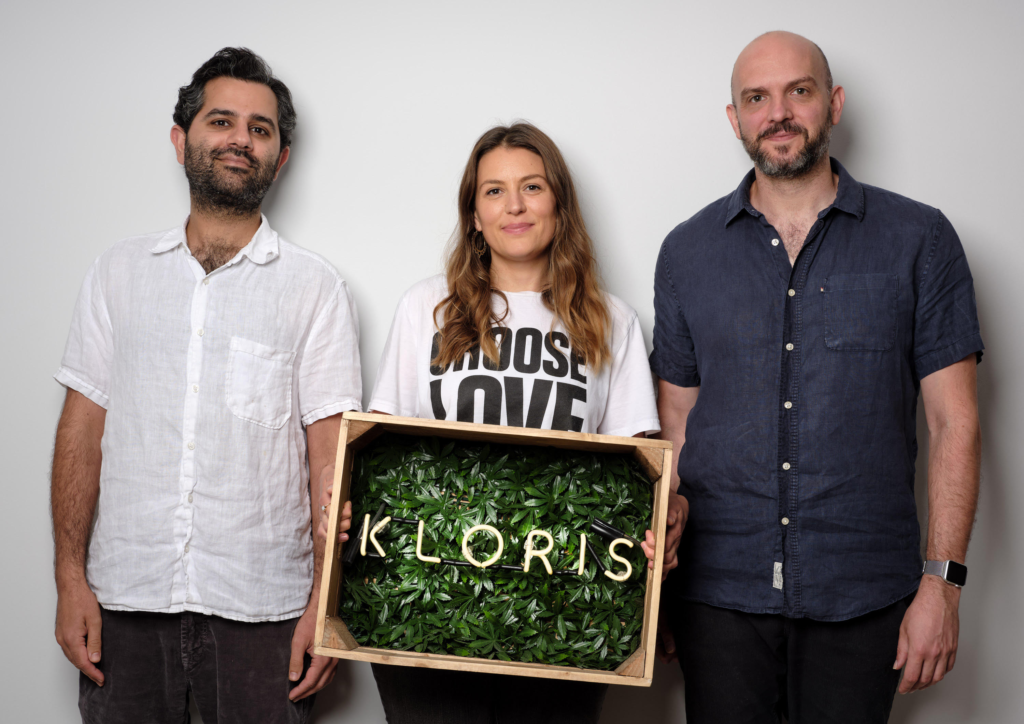
Pedram with co-founders Kim Smith & Matt McNeill.

“You can’t look externally for change without first doing what’s within your own sphere of control. We were fed up with seeing products needlessly wrapped in single use plastic, or with excessive packaging designed to look pretty but that was a nightmare for the environment. Our mission is to be 100% plastic free very soon, we are currently sitting at around 98%,” Mehrshahi said.

Within the CBD area specifically, Mehrshahi said the market grew very quickly. Cheap brands flooded the market. These companies sell products that are poorly made, untested, and don’t deliver what they promise, especially in terms of the concentration and quality of CBD. 

“We realized we needed to counter this with rigorously tested, high-quality products and that this could be done in an environmentally-friendly way,” Mehrshahi said.

Managing the Bottom Line

The company has managed to avoid financial turmoil largely because, from the very start, they built their environmental commitments into the business model. 

By setting an authentic green and sustainable manifesto and performing due diligence from the get-go, the company works only with manufacturers and suppliers who share the same ethos when it comes to sustainability. 

As a result, higher costs are more efficiently tolerated and absorbed across the supply chain. This kind of partnership is a game-changer.

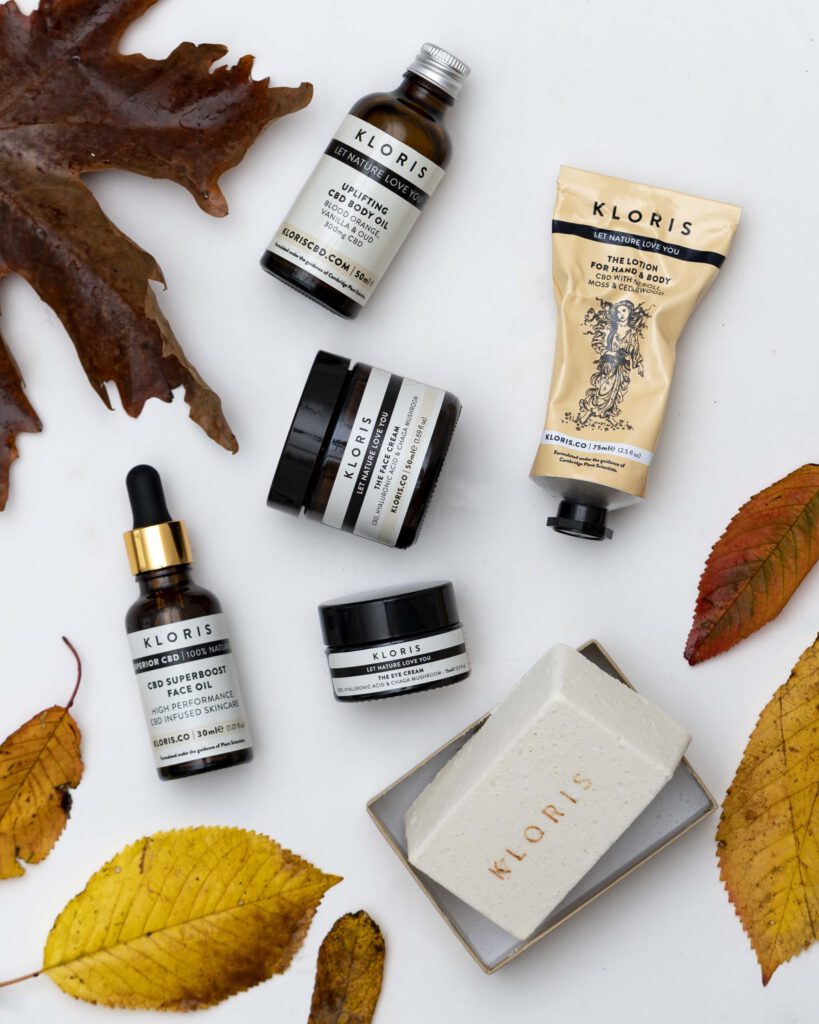
Kloris Product Offerings.

Unwavering Commitment Is Key

What began over a meal discussing the many ways CBD was helping people — from anxiety and insomnia to menstrual cramps and backache — has evolved into a mission to bring ethical, reliable, and science-backed products to consumers. 

The management team spent months on a global search for the purest CBD, cultivated in the most sustainable and responsible manner. With sustainability and efficacy at the forefront of the company’s purpose, Kloris is committed to harnessing the healing power of nature and combining it with ethical business practices that honor the earth.

Mehrshahi emphasized, “We see this as a never-ending journey. We’re always looking to do better, and so we will continue to evolve the business, our products, and processes as fast as we can.”

This article was first published in the winter 2021 issue of Cannabis & Tech Today. Read the full issue here for free.

A link to your site, with your site's name and description as anchor text.


Via https://cannatechtoday.com/people-want-eco-friendly-cannabis/


source https://renzverspaget.weebly.com/blog/its-not-easy-being-green-but-people-want-eco-friendly-cannabis

5 Advantages of Smoking Cannabis With a Water Pipe

TESTSTSARDSAR

5 Advantages of Smoking Cannabis With a Water Pipe by Sponsored

As the cannabis industry is slowly expanding and marijuana is being legalized in various parts of the world, people are becoming more interested in learning about the different methods to consume cannabis. Although rolling up a joint is the most common way to get your THC fix, there is another method that is quite popular among cannabis users and that is water pipes, also known as bongs.

Generally, water pipes consist of a bowl and a cylinder glass piece called a downstem through which the smoke travels and is filtered through water before going up the water pipe’s neck to the mouthpiece.

They are really one of the best ways to smoke cannabis because they are simple to use, they filter the smoke to remove tar, and can provide you with an enhanced smoking experience.

However, this isn’t the only reason why water pipes are a favorite among consumers. Here is a brief guide that explains the five advantages you get from smoking cannabis from water pipes.

Photo by Grav from Unsplash

Come in a Variety of Styles

One of the best things about water pipes is that they come in a variety of styles and types, all of which are aesthetically pleasing and can provide consumers with a better smoking experience.

They can be made out of different materials and come in all kinds of shapes and forms that range from the simple to the complex.

For example, the hexagon ceramic bong is an excellent water pipe style that is highly functional and very visually appealing. The shape of the bong has the power to provide you with the smoothest hit while the ceramic material gives the entire smoking device a sleeker look.

Offers More Effective Smoking

Another major reason why water pipes are the best method for consuming cannabis is because they offer more effective smoking.

This is because the water pipe can cool and filter smoke to give you a smoother toke that feels less harsh compared to what you get from a rolled joint.

To understand this better, you should know how water pipes work in the first place.

Bongs generally feature a small bowl that holds dried cannabis which when you light it, it combusts. Meanwhile, as you inhale, the water in the bottom of the device bubbles, raising the smoke up through the water and the downstem and producing a smoother hit.

Provides Better Filtration

Improved filtration is another great advantage of smoking cannabis using a water pipe. Although lighting anything on fire produces carcinogens, the water pipe can significantly reduce the number of harmful compounds that end up in your lungs because of its ability to filter the smoke through the water.

In addition to this, water can also filter out other nasty toxins of combustion, such as tar. The water pipe’s main parts help keep any ash and tar particles in the water instead of allowing them to enter your mouth and lungs.

For an even cleaner smoking experience, consider adding an ash-catcher accessory to your water pipe.

Prevents a Mess

If you have been smoking your cannabis in the form of joints, then you know what a mess can be made with the rolling paper and the flower buds especially if you do not have prior experience.

There can be marijuana spread across your table and a lot of ash while you are smoking, which certainly makes the entire process very messy.

However, this mess can be easily prevented with the water pipe as the smoking device doesn’t require you to use any rolling paper. This means there will be no ash and you won’t have to worry about cleaning up after.

Offer Better Dose Control

Despite the numerous benefits cannabis is believed to offer users, people still need to be careful with how much they consume. Too much consumption can lead to various side effects, including a psychoactive reaction, lung damage, persistent cough, and even increased anxiety.

You can reduce the risk of such side effects if you use a water pipe because the device offers better dose control than grinding cannabis into a rolling paper in which you cannot measure the right amount. In a water pipe.

However, the bowl has a measurement that allows you to see how much cannabis you are consuming and whether you should add more or less.

Photo by Pavel Danilyuk from Pexels

Final Thoughts

After joints, bongs are undoubtedly the best way to consume cannabis. They filter and cool the smoke that comes from burning marijuana, thus providing an enhanced smoking experience to consumers.

You can find them in various shapes, sizes, and materials, all of which can contribute to better and smoother hits.

In case you need any more reasons, be sure to check out our other articles and learn about the numerous benefits you get from smoking your cannabis from a bong.

A link to your site, with your site's name and description as anchor text.


Via https://cannatechtoday.com/5-advantages-of-smoking-cannabis-with-a-water-pipe/


source https://renzverspaget.weebly.com/blog/5-advantages-of-smoking-cannabis-with-a-water-pipe

Tuesday, 24 May 2022

U.S. Hemp Roundtable Calling On FDA to Apply Enforcement Discretion for CBD Products

Referencing the FDA’s recent decision to use enforcement discretion for the antioxidant N-acetyl-L-cysteine (NAC), which legally frees the amino acid to be included in dietary supplements, sold, and consumed, the U.S. Hemp Roundtable is suggesting the FDA could approach CBD in the same way while Commissioner Robert Califf devises a regulatory pathway. 

As the FDA defines it, enforcement discretion describes a situation in which an article that technically qualifies for FDA regulation enforcement is not subjected to these requirements because of an overwhelming consensus that the associated safety risks are negligibly low.

In a letter to the FDA written today (Mar 23), the U.S. Hemp Roundtable’s general counsel drew parallels between N-acetyl-L-cysteine, which qualified for enforcement discretion because of the amino acid’s well-established safety profile, and CBD, which has by now accrued an ample array of safety studies painting a similarly innocuous picture. 

“The Roundtable requests that FDA take the same incremental steps for CBD and issue a similar policy of enforcement discretion for dietary supplements that contain CBD,” wrote Jonathan Miller, General Counsel for the US Hemp Roundtable. “We also request that the Agency consider a rulemaking to provide that CBD is lawful in dietary supplements.”

One legal obstacle in doing so involves the stipulation that any “article” previously approved or investigated as a drug (FDA approved CBD drug Epidiolex for seizures) cannot be included in the legal definition of “dietary supplement,” but as pointed out in the letter, the FDA is also empowered to explicitly include said article(s), which it may do for NAC.

The tone coming from the Roundtable and other industry supporters is decidedly more hopeful than it has been at previous opportunities such as this one, mostly because of the Roundtable’s expressed optimism for the intent of FDA Commissioner Califf to address the frustrating post-Farm-Bill stalemate that has shackled many in the hemp industry.

“It looks pretty much the same in terms of where we are now,” said Califf of 2018-era CBD regulations during a recent budget request hearing, before adding, “I don’t think the current authorities we have on the food side or the drug side necessarily give us what we need to have to get the right pathways forward.”

Apply discretion in the short term while formulating more robust regulatory oversight, says U.S. Hemp Roundtable and supporters, and the CBD industry can wait more patiently as it enjoys the added breathing room.


via The CBD Insider https://thecbdinsider.com/news/u-s-hemp-roundtable-calling-on-fda-to-apply-enforcement-discretion-for-cbd-products/#utm_source=rss&utm_medium=rss&utm_campaign=u-s-hemp-roundtable-calling-on-fda-to-apply-enforcement-discretion-for-cbd-products


source https://renzverspaget.weebly.com/blog/us-hemp-roundtable-calling-on-fda-to-apply-enforcement-discretion-for-cbd-products

U.S. Hemp Roundtable Responds After Veteran Is Denied Small Hemp Business Certification By the VA

On May 19, the Veterans Affairs’ Center for Verification and Evaluation denied a veteran hemp business owner’s application for a Service-Disabled Veteran-Owned Small Business on the grounds that the business sells marijuana illegally, prompting the U.S. Hemp Roundtable to come to the business owner’s defense. 

Holistic Serendipity is a Tampa-based business owned by U.S. military veteran Zachary Zindler, who, as the VA describes it, would have “opportunity to compete for VA set asides” if his business were approved by the department as a Service-Disabled Veteran-Owned small Business (SDVOSB).

A clear symptom of the lingering confusion that continues to cloud cannabis legislation across the country, the VA’s conflation of hemp and high-THC was the focal point of the U.S. Hemp Roundtable’s letter to the VA written in response to the denial of Mr. Zindler’s SDVOSB application.

As Jonathan Miller of the Roundtable’s General Counsel put it, “None of the submitted information or documentation indicates that Holistic Serendipity sells marijuana … hemp is not marijuana, but rather is non-intoxicating and a legally and scientifically distinct subspecies of the cannabis plant.”

Considering the federal legality of hemp as established by the 2018 Farm Bill—which legalized hemp products containing less than 0.3% THC by dry weight—the Roundtable’s argument rests heavily on the business only selling federally legal hemp products.

Further strengthening Mr. Zindler and the Roundtable’s recourse is the power of the Consolidated Appropriations Act, which, as cited in the Roundtable’s letter to the VA, prohibits “federally appropriated agencies from using federal funds to prohibit the transportation, processing, sale, or use of hemp.”

In addition to supporting the business owner in this particular case, should the VA reconsider the denial, it will help in building clearer precedents for states to use when legally defining hemp.


via The CBD Insider https://thecbdinsider.com/news/roundtable-defends-veteran-hemp-business-owner/#utm_source=rss&utm_medium=rss&utm_campaign=roundtable-defends-veteran-hemp-business-owner


source https://renzverspaget.weebly.com/blog/us-hemp-roundtable-responds-after-veteran-is-denied-small-hemp-business-certification-by-the-va

Department of Veterans Affairs Thinks Hemp Is Illegal. Its Not.

TESTSTSARDSAR

Department of Veterans Affairs Thinks Hemp Is Illegal. It’s Not. by Aron Vaughan

Zack Zindler and his hemp company, Native Ceuticals Tampa, were denied inclusion in the Department of Veterans Affairs (VA) Veterans First Contracting Program citing illegal substances, but legal experts say the 2018 Farm Bill states otherwise.

The VA Center for Verification and Evaluation (CVE) announced Tuesday they have denied a former Marine and his hemp company inclusion in the VA’s Veterans First Contracting Program, striking a blow to companies looking to provide alternative treatment options to injured and battle-fatigued service members, but legal experts are saying the VA is in the wrong.

Zack Zindler, a veteran and owner of Holistic Serendipity, doing business as Native Ceuticals Tampa, was denied his service-disabled veteran-owned small business (SDVOSB) certification due to the misclassification of hemp as a Schedule 1 Controlled Substance by the VA, despite the Farm Bill of 2018 federally removing hemp from the definition of marijuana in the Controlled Substances Act (CSA) in December of 2018.

In May of 2021, Zindler started Native Ceuticals Tampa after entering into a licensing agreement with Native Ceuticals, the parent corporation recently featured on Fox Business’s Trending Today for their “seed-to-shelf” production of CBD products derived from hemp. Zindler says he started Native Ceuticals Tampa to provide a natural alternative to narcotic and pharmaceutical treatments for military service members recovering from injury or suffering from stress-related symptoms, such as PTSD.

“Being an injured veteran myself and having been prescribed different medications for what I was dealing with, I experienced firsthand how hemp helped to regulate and process my emotions, and also helped with physical ailments, without the dependency or side effects” said Zindler, a 32-year-old from Tampa, Florida.

“If these products can help me, I know it can help others like me, so I’m trying my hardest to get this into the hands of those who need it most — our veterans.”

To help reach more service members, Zindler decided to utilize his service-disabled veteran status to apply for the Veterans First Contracting Program in August of 2021.

According to the U.S. Federal Contractor Registration (USFCR), which helps businesses and nonprofits register for government set-aside programs, every year the federal government spends nearly $500 billion on contracts, with the goal of spending three percent of that budget on businesses within the Veterans First program.

Acquiring the SDVOSB certification would give Zindler and his company preferential treatment within the VA over other set-aside programs, allowing Native Ceuticals Tampa to extend its reach and help more veterans using federal funds.

However, on Tuesday, Zindler and his company were denied their SDVOSB certification for an unusual reason. According to the CVE, Native Ceuticals Tampa is dealing in a Schedule 1 Controlled Substance.

In their letter of denial, the CVE stated, “The Controlled Substance Act (CSA), 21 United States Code (USC) §§ 811 and 812, provides that Marijuana is a Schedule I Controlled Substance and is illegal. If a business concern elects to implicitly or explicitly include in its marketing material or pursues contracting opportunities relating to the production and/or endorsement of Marijuana and simultaneously applies for and becomes verified by CVE as a Veteran-Owned Small Business, the VA could be seen as endorsing illegal conduct under Federal law.”

Legal experts, however, insist the classification of hemp as a Schedule 1 drug is legally inaccurate according to the 2018 Farm Bill.

“Putting aside that the CVE has granted this certification to other companies specializing in CBD, the VA is not abiding by the most recent definition of cannabis as defined by the federal government,” said Abigail Nath, a cannabis lawyer and consultant for Native Ceuticals Tampa.

“If this is the sole reason the VA is denying this company a part in their program, they’re wrong.”

For decades, federal law did not differentiate hemp from other cannabis plants, all of which were officially deemed illegal in 1937 under the Marihuana Tax Act and formally made illegal in 1970 under the CSA, with the latter banning all forms of cannabis.

Passed in December of 2018, the U.S. Farm Bill, specifically section 12619, removes hemp-derived products from its Schedule I status under the CSA.

Furthermore, The 2018 Farm Bill ensures that any cannabinoid — a set of chemical compounds found within the cannabis plant, including CBD, CBG and CBN — that is derived from hemp will be legal, “if and only if that hemp is produced in a manner consistent with the Farm Bill, associated federal regulations, association state regulations, and by a licensed grower.”

“As one of the leading CBD companies in the nation, we ensure we are in accordance with every law and regulation in order to grow and distribute hemp,” CEO of Native Ceuticals Walter Tribolet said.

“Every Native Ceuticals product is tested to comply with government standards of scientific certainty that all our products are THC free or comply with the federal maximum of 0.3 percent or less.”

Zindler even went as far as to obtain his hemp food permit from the Florida Department of Agriculture and Consumer Services, a requirement to sell CBD and other hemp products legally in Florida.

“The CVE’s reference of marijuana in their denial letter is an obsolete and moot point, as Zack’s company only sells products that are derived from hemp, a federally legal plant,” Nath said.

“Three years ago, the federal government made a legal distinction between marijuana and hemp through the Hemp Farming Act of 2018. As the CVE and the Veterans’ First Contracting Program is ‘governed exclusively by federal law,’ it must utilize the correct legal definitions of these plants when verifying Native Ceuticals Tampa’s application for verification as an SDVOSB.”

Zindler is currently filing for an appeal to reverse the VA’s decision.

Zindler is currently weighing his legal options, but claims this is just the beginning of his fight to make natural hemp treatment options legal and available for past and present military personnel who need it.

A link to your site, with your site's name and description as anchor text.


Via https://cannatechtoday.com/veterans-affairs-thinks-hemp-illegal/


source https://renzverspaget.weebly.com/blog/department-of-veterans-affairs-thinks-hemp-is-illegal-its-not

Colorful Flavonoids Make Cannabis More Therapeutic

TESTSTSARDSAR

Colorful Flavonoids Make Cannabis More Therapeutic by Roger Brown

Cannabis is brimming with fragrant, colorful, and therapeutic compounds ripe for exploration and extraction. Yet, innovators have barely scratched the surface in developing products that utilize the plant’s complete spectrum profile. 

While consumers are aware of major cannabinoids and terpenes, the industry hasn’t introduced therapeutic flavonoids in a meaningful way quite yet.

However, the cannabis industry is always searching for new innovations, and flavonoids have the potential to be just that. Not to mention, they smell and taste great, too.

Flavonoids are exciting, not only for their unique wellness properties but also for their capacity to introduce a vast array of new products that have yet to be seen in this ever-evolving industry.

What Are flavonoids?

Flavonoids are not exclusive to hemp and cannabis. You can find 8,000 varieties of flavonoids in almost every plant species, including vegetables, fruits, and herbs, as well as products such as wines and chocolate.

Flavonoids provide pigment, flavor, and environmental protection for plants, preventing damage from environmental stressors like bacteria, fungi, insects, and the sun’s UV rays. Studies have also shown that flavonoids are highly therapeutic to humans.

These tiny compounds are making a big splash in the cannabis industry. According to Market Reports World, the flavonoids market will reach $1.2 billion by 2024, bolstered by the increased interest from brands and innovators.

However, there’s still a significant gap between industry interest and consumer education. The general public is largely unaware of flavonoids, despite news of their remarkable therapeutic properties beginning to circulate in the mainstream. 

Researchers are finding that flavonoids provide an array of benefits beyond functioning as antioxidants and anxiolytics (anti-anxiety).

A study published in the American College of Nutrition found that 500mg of the botanical flavonoid Quercetin taken each day over eight weeks helped reduce stiffness and pain for women with rheumatoid arthritis. 

Researchers from Harvard Medical School found that Caflanone, a flavonoid extracted from a rare cannabis strain in Jamaica, may potentially be a therapeutic drug against COVID-19. Caflanone recently received the “Orphan Drug” designation from the United States Food and Drug Administration (FDA).

A review of Kaempferol found that it controls and modifies critical processes, including apoptosis (cell death), inflammation, and metastasis (cancer spread).

A 2020 review of existing literature concluded that botanical flavonoids, including Apigenin, block the synthesis of inflammatory mediators.

Flavonoids and the Healing Potential of Full Spectrum

Despite the troves of flavonoids research, the cannabis industry hasn’t focused on testing for these compounds or on developing flavonoid-based products.

Innovators need to start investing in understanding how flavonoids occur, how to extract them, and how they may play a role in the entourage effect — a process by which cannabinoids, terpenes, flavonoids, and other compounds interact with the body’s endocannabinoid system (ECS).

Once they do, brands can produce strains with profiles to tailor the consumer experience. They can also infuse strains with botanical flavonoids or create custom flavonoid extracts. 

Tailoring an individual’s cannabis experience depends on understanding how the cannabis compounds work together to create its therapeutic, flavor, and fragrance profiles.

Like cannabinoids and terpenes, flavonoids act as anti-inflammatories, antioxidants, and antibacterials. These factors make their presence fundamental to maximizing the therapeutic powers of the full spectrum from controlling pain to producing mood-altering, uplifting results.

Why Brands Should Look Beyond Cannabinoids and Terpenes

It’s time for the industry to look beyond cannabinoids and terpenes alone and begin proactively testing products for flavonoids while utilizing the vast scientific information available to create tailored products. 

We must continue learning about these compounds based on evidence, not anecdotal information. Pharmacokinetics — the study of drug movement through the body — and studies on bioavailability — the extent a substance becomes available in the body — are integral to understanding how flavonoids function.

As an industry, we must prioritize testing for these compounds as the first step in formulating effective compounds for developing new products. Those who take advantage of these extraordinary compounds will surely capitalize on the market’s growth. 

Innovative Niche Product Potential

It’s clear that ingestible products are today’s most significant growth sector in the cannabis industry — exemplified by cannabis beverages’ rise in popularity.

Developing flavonoid extracts, for example, is an effective strategy for entering a new segment of the market that acts as both an ancillary and distinct product.

Since flavonoids provide flavor, fragrance, and pigments, botanical extracts open the door for experimentation. Combining cannabinoids, terpenes, and flavonoids can create delicious, endocannabinoid-activating experiences. 

Thanks to the public’s growing interest, hybrid plant wellness products are also rising. Botanical/CBD blends are on the market in several forms, including teas, tinctures, and capsules.

Some brands are combining the medicinal properties of CBD, CBG, CBN and terpenes with the healing powers of mushrooms and cordyceps.

Flavonoids are a dynamic botanical to add to the cannabis repertoire. And since they represent popular flavors and aromas including chamomile, ginger, and berry, there are many ways brands can add them to edibles, beverages, tinctures and more.

There is a clear path to entering this niche: more frequent and improved testing can help close the information gap on flavonoids by providing easy-to-understand Certificate of Analyses (COAs) illustrating the product’s specific compound profiles.

As this information becomes readily available and better understood, brands, consumers, and budtenders can access it and seek out blends and products that meet their specific needs.

The Future of Flavonoids

At ACS Laboratory, we trust that more brands will begin regularly testing for flavonoids.

Additionally, we need to investigate how to best extract flavonoids from cannabis/hemp to begin flavonoid-based product innovation.

By committing to testing and research initiatives, brands can learn more about the compounds present in their products, and consumers will have the tools to make informed decisions on their paths to personalized usage.

We are excited to continue exploring the vast potential of cannabis and hemp.

Innovation is key to creating comprehensive options that elevate cannabis’ full spectrum potential and research studies are the keys to proving efficacy.

This article was first published in the winter 2021 issue of Cannabis & Tech Today. Read the full issue here for free.

A link to your site, with your site's name and description as anchor text.


Via https://cannatechtoday.com/flavonoids-make-cannabis-more-therapeutic/


source https://renzverspaget.weebly.com/blog/colorful-flavonoids-make-cannabis-more-therapeutic

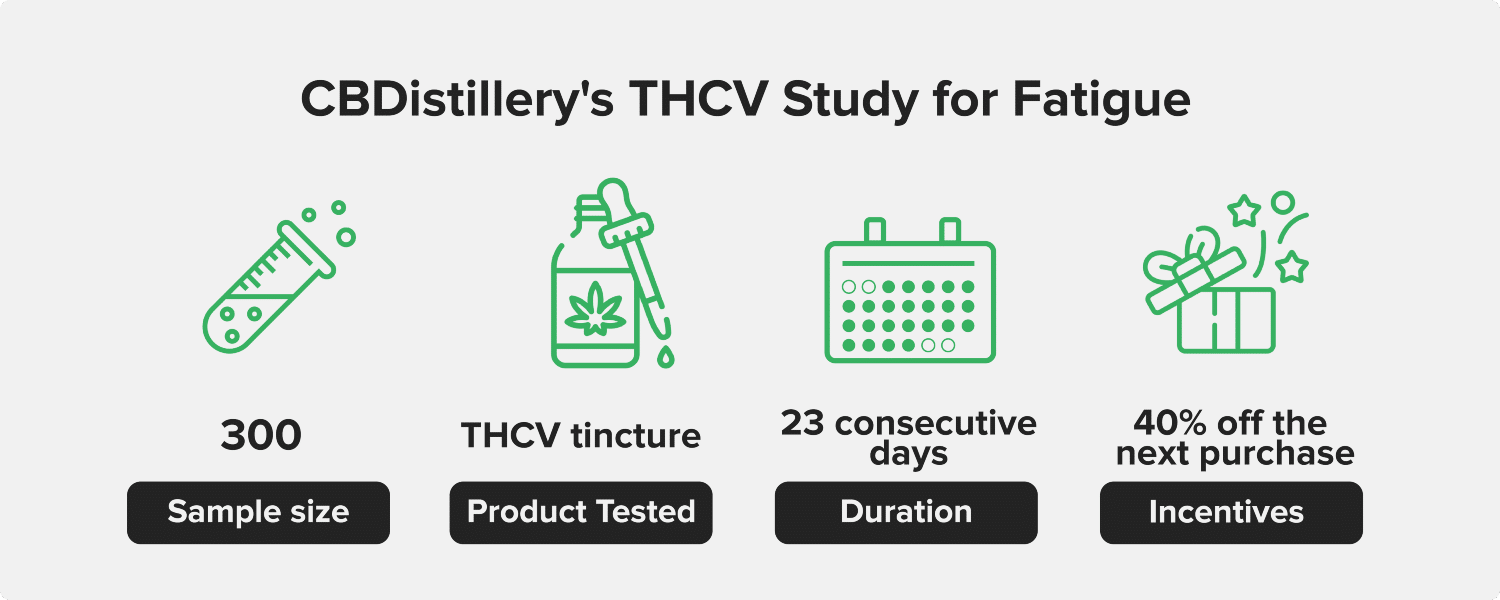
CBDistillery To Launch THCV Study

Moving onto the next “pathfinder mission,” as CBDistillery is calling their intensive research campaign spanning various hemp products an...